| PAYWALL REMOVED |
| This is a collaborative article. Vaasa Insider independently decides on and creates the editorial content, while partner companies sponsor free access to the article. Together, we support Ostrobothnian business. |
When wind and solar fall short, nuclear energy, both small and large scale, offers a reliable path forward, some experts say.
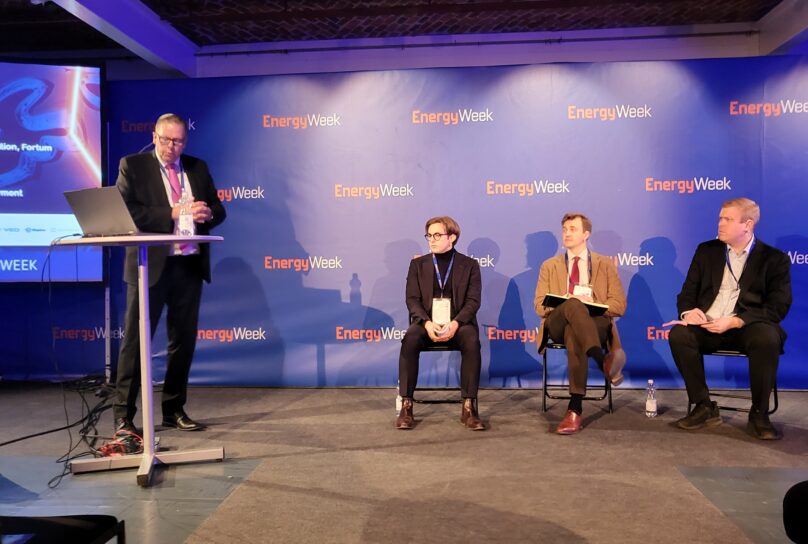
When the wind isn’t blowing and the sun isn’t shining, where should energy systems turn? One answer is nuclear power, both small modular reactors, SMRs, and large conventional plants, according to experts speaking at a nuclear seminar during Vaasa EnergyWeek.
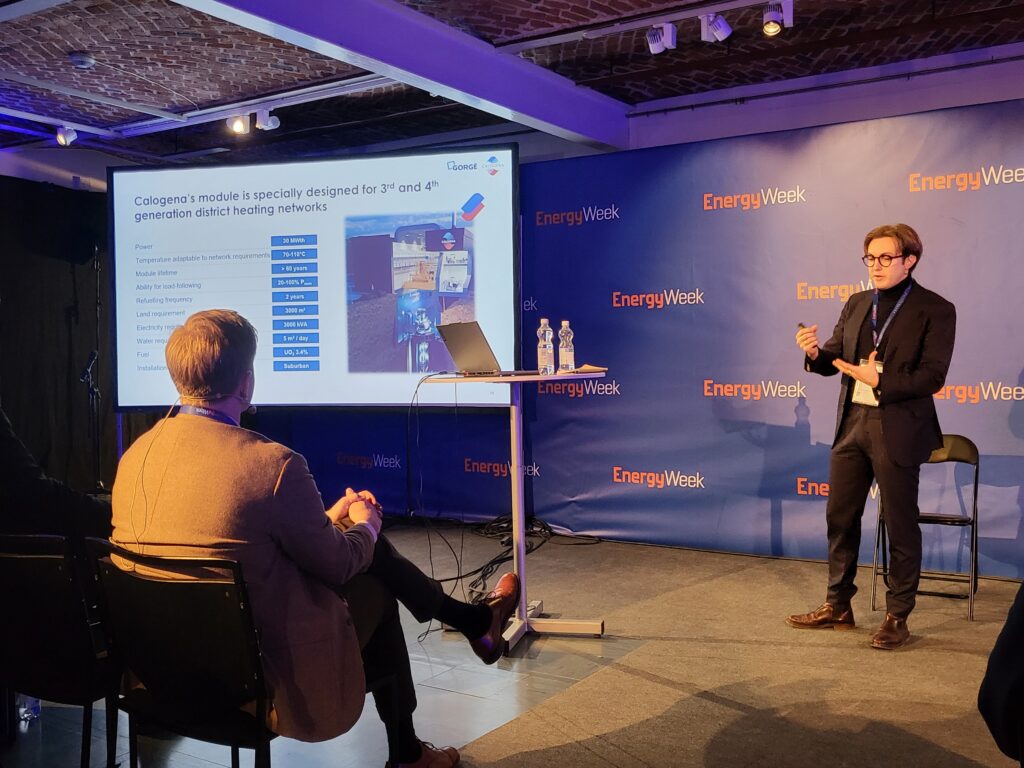
A significant share of Europe’s energy consumption is used for heating. César Dulac, External Relations Manager at Calogena, argues that SMRs are particularly well suited for district heating networks.
“We believe nuclear has a role to play, and SMRs make sense for heat,” he says.
Scalability and factory based production
At the seminar, Dulac and other experts emphasized that both small modular reactors and large scale nuclear plants will be needed to ensure long term, reliable energy production and reduce dependence on fossil fuels.
Dulac also highlighted the advantages of the modular approach, describing it as a shift in thinking that enables scalability and factory based production.
“If you only build one reactor, you wouldn’t build a factory for it. That would be like building a factory to produce a single car,” he explains.
Nuclear already a major force
Nuclear energy is already a cornerstone of Finland’s energy system. According to figures presented at the seminar, nuclear power currently accounts for around 40 percent of the country’s electricity production, with estimates ranging from 37 percent last year to about 40 percent today.
Jami N. Arvola, representing Fortum’s Corporate Relations and Nuclear Generation, sums it up:
“Nuclear is the backbone of our energy system. We were reminded this winter that winter still exists in Finland.”
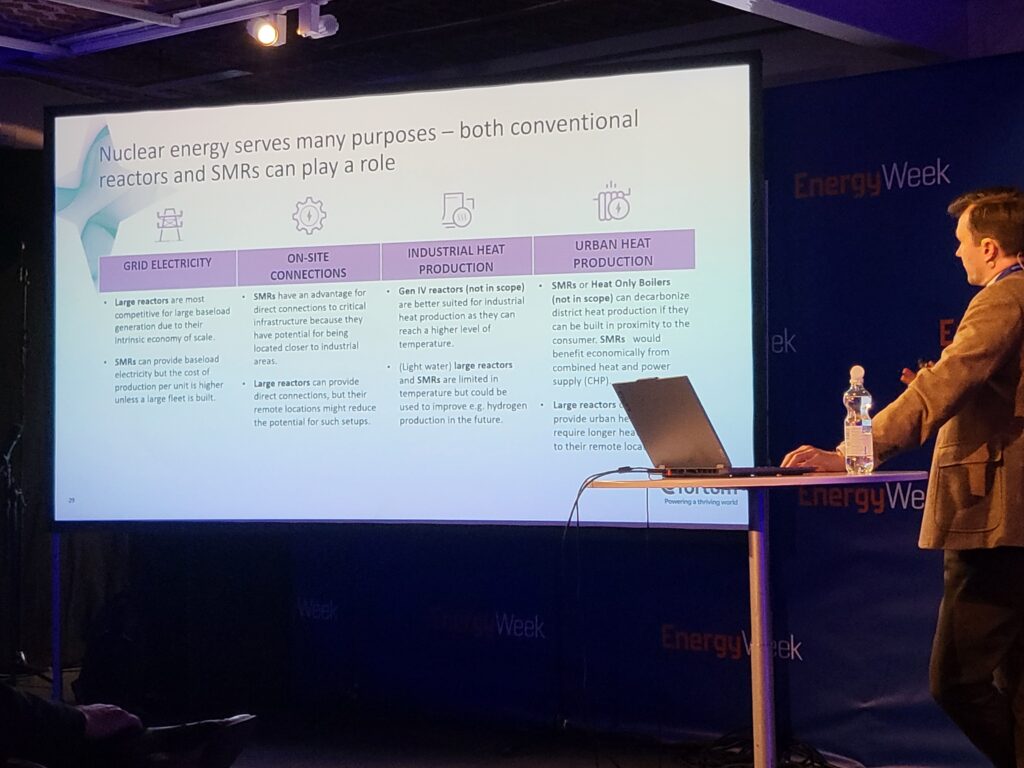
Arvola notes that nuclear power plays a crucial role in helping Finland meet its climate targets. At the same time, he stresses that it is a long term solution, not something that can be implemented overnight.
“New nuclear capacity will not be built on an emergency basis in the Nordics.”
Still, Fortum is preparing for a future with more nuclear power.
“Last year, Fortum acquired additional land near the Loviisa nuclear power plant.”
Arvola also points out that nuclear energy is a highly efficient form of energy production in terms of land use.
Stability and safety
Juho Korteniemi, Deputy Director General at the Ministry of Economic Affairs and Employment, agrees that nuclear energy has an important role to play. He emphasizes stability as one of its key advantages, along with its ability to reduce price volatility.
“How ever, nuclear technology must be monitored very carefully.”
Jami N. Arvola concludes that the future energy system will not rely on a single solution.
“It is not about choosing one technology. We will need a wide range of technologies to meet future energy needs.”
Here you can find the full program and register for events.
READ ALSO:
Vaasa EnergyWeek: A Growing Garden for Global Energy Innovation