
| PAYWALL REMOVED |
| This is a collaborative article. Vaasa Insider independently decides on and creates the editorial content, while partner companies sponsor free access to the article. Together, we support Ostrobothnian business. |
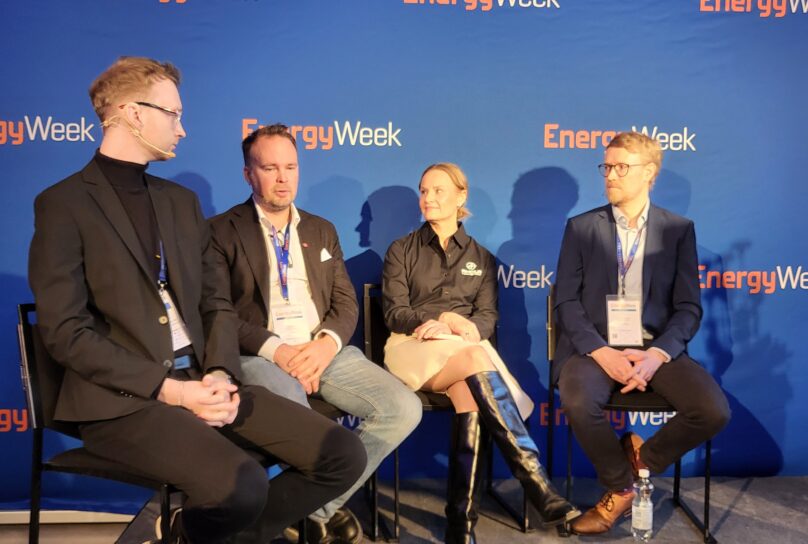
At Vaasa EnergyWeek, a deep dive into sustainable logistics made one thing clear: profitability and sustainability are no longer competing goals. They are fundamentally linked.
“If you want to be profitable in the future, you need to be sustainable.”
Those were the words of Tony Ehrs, Freight Director at Wasaline, speaking at a Wednesday seminar exploring how different transport modes are addressing environmental challenges, as well as how ports are evolving into multifunctional hubs.
Wasaline, which operates ferry traffic between Vaasa and Umeå, has already integrated sustainability into what Ehrs describes as a “standard product” offering.
“We need to stand out and remain competitive. One way to do that is by being both bold and proactive,” he says.
Investments driving sustainable competitiveness
Ehrs emphasizes that investments play a crucial role, not only in growth but also in sustainability. Wasaline’s new vessel is a key example of how modern infrastructure can significantly reduce environmental impact.
Tommi Tuominen, Development Director at Kvarken Ports Ltd, shares this view. He notes that the port has made substantial investments, all aimed at supporting more sustainable operations.
“For example, dredging is also part of this. By enabling larger vessels to enter the port, emissions per ton of cargo can be reduced,” Tuominen explains.
Ports as platforms for collaboration
The seminar’s moderator, Anna Måtts-Fransén, Logistics Expert and Project Manager at Vaasa Region Development Company VASEK, highlights the evolving role of ports.
“Ports are multifunctional platforms with many different stakeholders,” she says.
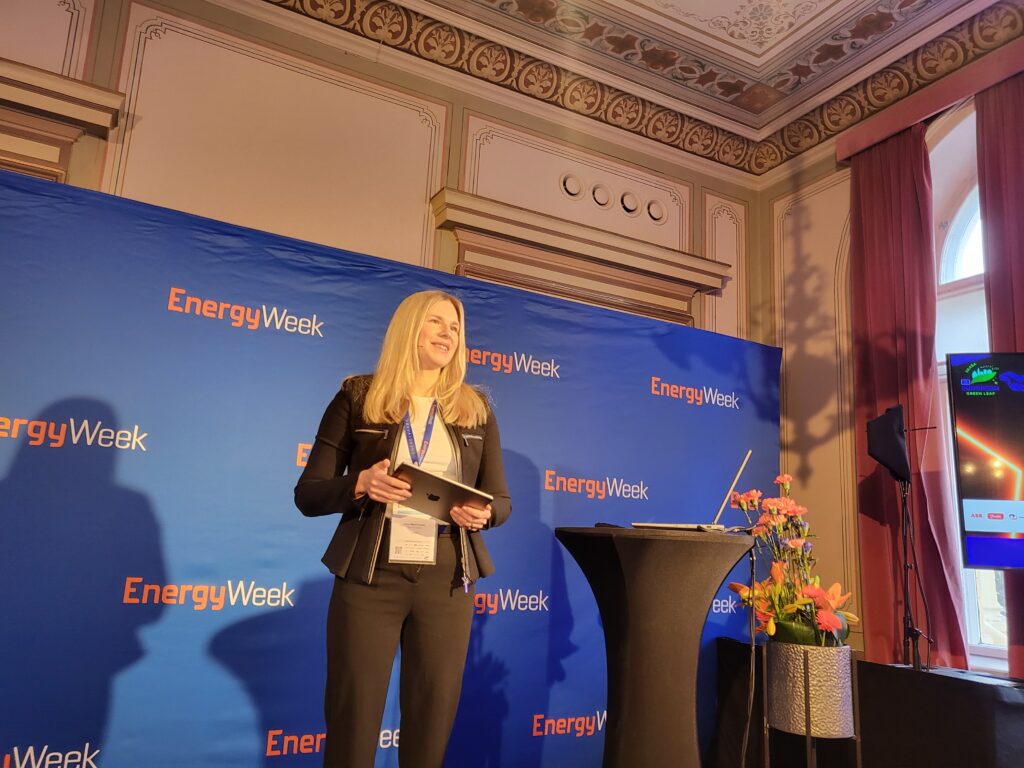
Mika Ritonen, Operations Manager at Nurminen Logistics, stresses the importance of ongoing dialogue between ports and logistics providers.
“For us, sustainability is about the entire transport chain,” Ritonen notes.
Annele Heikkilä, HR Director, Sustainability at Ahola Group, expresses a similar view.
“Logistics is a chain, and every link matters. Collaboration is crucial.”
Data, Drivers and Daily Decisions
Heikkilä adds a practical dimension by highlighting the role of drivers in achieving both economic and environmental goals.
“Our main drivers are, quite literally, our drivers,” she says with a smile.
Driver behavior has a direct impact on fuel efficiency and emissions. At Ahola Group, data is continuously collected and used to provide feedback to drivers on their performance.
What started as a monitoring tool has evolved into something more engaging.
“It has actually become a fun internal competition. Drivers compete to see who can drive most efficiently. In that sense, both the environment and the bottom line win.”
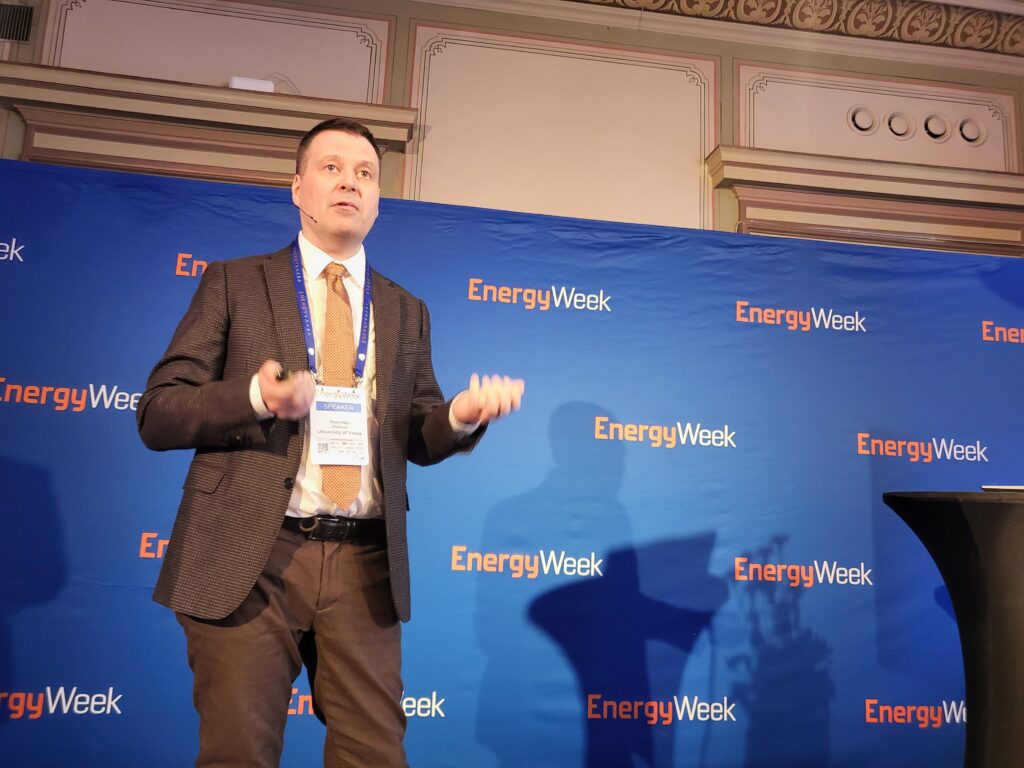
Petri Helo, Professor at the University of Vaasa, offered a broader perspective on sustainability. While much of the discussion focused on environmental and economic dimensions, he reminded the audience that the social aspect also is important and should not be overlooked.
Here you can find the full program and register for events.
READ ALSO: